


Good coordination really amounts to the activation of the right muscles, in the right sequence, at the right time for the performance of a particular task and helps to keep us pain free and avoid injury. It also contributes to other motor abilities such as mobility, stability, balance, and strength (sport-specific strength training can be described as coordination against resistance*).
There has been a huge shift to the biopsychosocial model in manual therapy in the last decade and understanding how psychological factors influence our experience of pain has and continues to change the way physical therapists communicate with, educate, and treat patients.

In part one of this series I used Greg Lehman’s analogy between the way an alarm sounded by a ship’s lookout gets passed up the chain of command to the Captain and how nociceptors ( the body’s pain sensors) pass information up to the brain. At various levels in the chain of command a decision is made as to whether the alarm warrants action – and so gets passed further up the chain – or can be ignored.
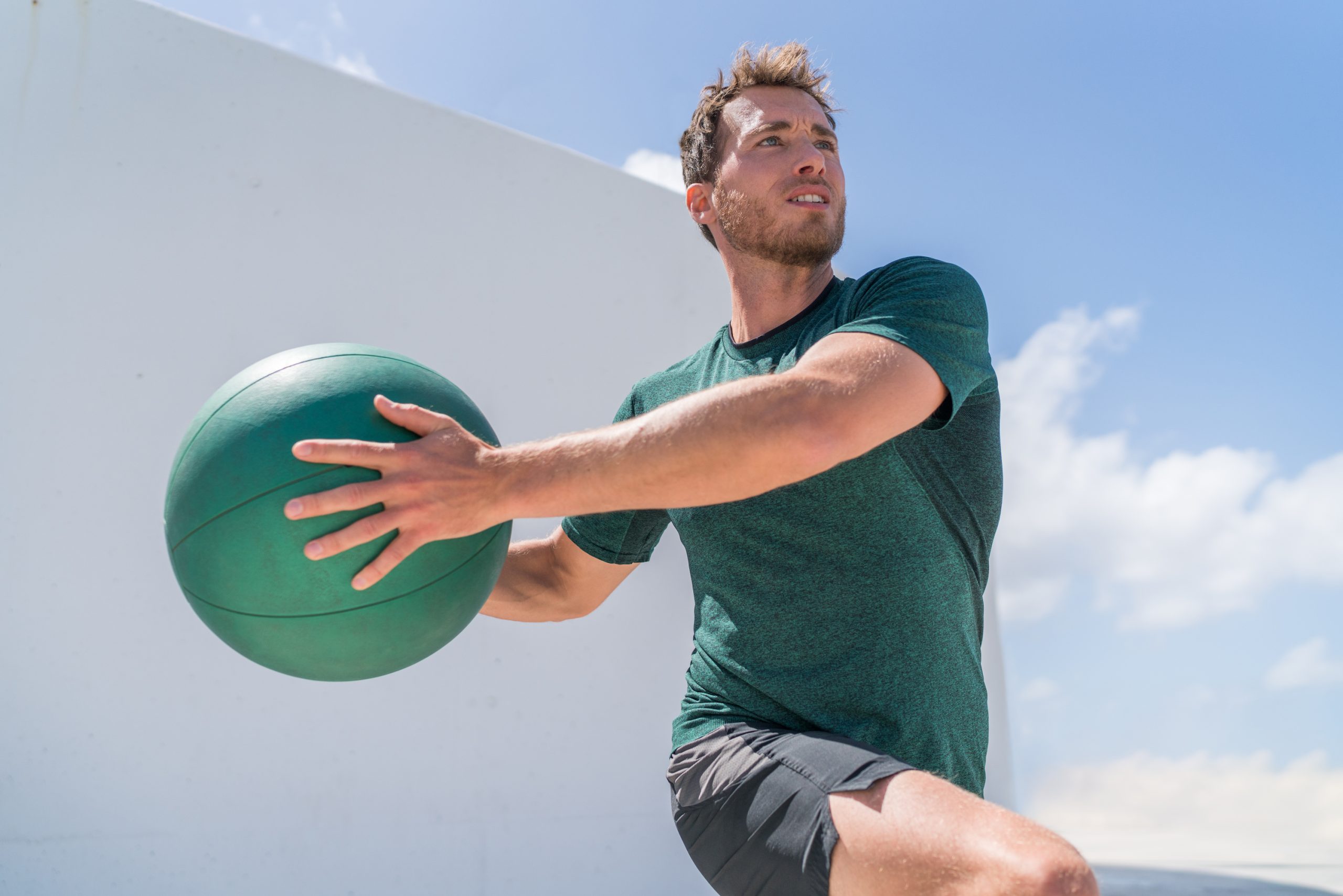
Abdominal exercises performed upright and in our normal relationship to gravity have better carryover to daily activities like lifting children into car seats (one of my own personal training objectives!). I show a couple of examples here from which you can extrapolate. The possibilities are, of course, endless.
The majority of patients I see in clinic have non-specific pain, that is, it cannot be attributed to a specific pathology like a fracture, tear, or sprain. Nevertheless, the pain alarm has been triggered indicating that action needs to be taken.
It can feel like a joint is out of place, but we know that most joints don’t go out of place unless there is significant trauma. It’s more accurate to think of the body in its current state as being unable to find a solution to performing a particular movement.

A few facts about damage and pain:
96% of athletes younger than 22 will show changes on an MRI that some people call “abnormal”. But since everyone has them how “abnormal” can they be? (Rajaswaran 2014)
37% of 20 year olds with NO PAIN have disc degeneration in their spine (Brinjikji 2015)
57% of 20-50 year olds with no hip pain will have cartilage and ligament tears (Tresch 2016)
If we want to understand how best to treat and rehabilitate ourselves after an episode of pain then it helps to have an understanding of the mechanism of pain, the things that influence it, and the circumstances which might give rise to it.
To understand anything about pain you need first to understand the process of pain. In this short series on the subject of pain I’ve re-worked content from “Pain Guidebook” – a free downloadable resource produced by Canadian physiotherapist, researcher, and educator Greg Lehman (http://www.greglehman.ca/) – in order to deliver a few bite-size explanations about different aspects of pain science. The guidebook makes use of analogies that make the mechanism of pain easy to understand.

My sister asked me to take a look at my 12 year old niece Grace at the weekend, as she was worried about a lump on her shoulder (she also has left knee pain).
The lump turned out to be her collar bone, which was more pronounced on the left due to compensations occurring through her body because of an unstable left foot. The photo below shows the position of the foot, though it is really how the foot is functioning that is the problem.
